Picture Chico in the 1980s: Big hair. Bigger glasses. Shoulder pads wide enough to block traffic on East Avenue. A cassette tape in the stereo. Maybe a station wagon in the driveway.
And under parts of town, something much less fun than synth-pop was starting to get attention.
Chico’s groundwater plume story began in the early 1980s, when perchloroethylene (wow, what a mouthful… let’s refer to it as “PCE”), was discovered in local groundwater. PCE was commonly used in dry cleaning, and Chico’s plume history is tied to dry-cleaning and other industrial activities that allowed volatile organic compounds (we’ll name them VOCs) to flow into groundwater.
So in 1984, The Terminator was released, we were glued to the silver screen by A Nightmare on Elm Street, and Cal Water discovered a nightmare in the city’s groundwater (DTSC).
But let’s not panic. Instead, let’s learn what has been done, and why your own tap or private well still deserves its own test… 42 years later!
What Is a Plume, Besides a Word That Sounds Like a Hair Metal Band?
A groundwater plume is an area where contaminants have spread underground through soil and water.
Think of it like spilled neon punch on a white carpet, except the carpet is underground, the punch is invisible, and nobody is dancing to a mixtape while it happens.
A plume usually starts from a source, like a dry cleaner, industrial site, leaking system, or chemical spill. Over time, contaminants can move with groundwater and form an underground path.
You cannot see a plume from your kitchen sink. You cannot smell it by standing in the yard. And you definitely cannot detect it by holding a glass of water up to the light like you are judging a crystal ball. But you can test (more on that later).
Back to the 80s: How the Chico Plume Story Started
In the early 1980s, Chico was dealing with a groundwater problem that would become a long-running local water story.
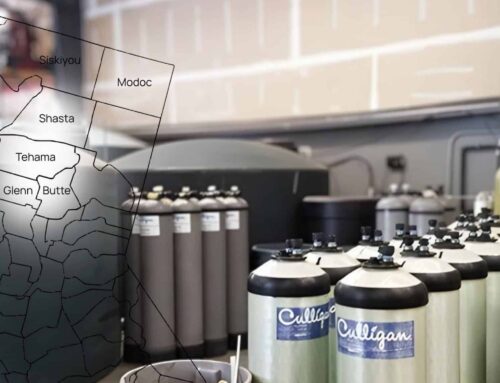
City planning documents later identified eight areas of contaminated groundwater in Chico. Six of those were tied to VOCs, and four were associated with PCE from dry-cleaning establishments. The same report explains that PCE was often poured down drains, and because it is highly soluble and heavier than water, leaky sewer pipes allowed it to contaminate shallow groundwater. (City of Chico)
Translation: Some of yesterday’s “out of sight, out of mind” habits became today’s groundwater cleanup projects.
The good news is that agencies and water providers did not just shrug and say, “Well, that’s not very tubular.” They started testing, tracking, treating, replacing, and managing affected water sources.
Acid Wash Jeans were a big deal, but why were dry cleaning solvents too?
PCE is a solvent that was widely used in dry cleaning. It is part of a group of the aforementioned VOCs (volatile organic compounds). Fancy name. Not a fancy thing to find in groundwater.
In Chico, some affected wells were taken out of service or had treatment installed when testing showed levels above drinking water limits. A City of Chico environmental report notes that wells shown to exceed limits for TCE or PCE were either taken out of service or fitted with treatment facilities. (City of Chico)
What Has Been Done Since the Mixtape Era?
This is not a frozen-in-time problem from 1984, stuck wearing leg warmers forever.
Over the decades, Chico’s plume areas have been monitored and treated. Officials note that one North Central Plume treatment system had operated since 1986, and that treated water showed no detected PCE in 2003 samples. The Southwest Plume affected fourteen private wells, which were shut down and abandoned in 1991 and residents were connected to a waterline funded by DTSC. (Butte County)
That matters because it shows the difference between “there was contamination” and “nothing has been done.”
For municipal water users, Cal Water said last year that the system conducted 47,794 tests on 3,300 water samples for 210 constituents and met every primary and secondary federal and state water quality standard that year. (Cal Water)
This is good news for Chico city water customers, but it is not the same as saying every private well outside city limits has the same testing, treatment, or oversight.
A Private Well is like an unlabeled VHS tape
If you are on Chico city water, you are connected to a regulated system. Municipal water is watched, tested, and managed.
Private wells are different.
If you are outside city limits, or in a rural area near Chico, Durham, Hamilton City, north Chico outskirts, or other well-heavy pockets, your well is your responsibility. It may not be routinely tested for things like:
- PCE and other VOCs
- PFAS
- Arsenic
- Nitrates
- Bacteria
- Hardness
- Iron
- Sulfur
That does not mean your water is bad. It means your water is unknown until it is tested.
And unknown water is like renting a VHS tape with no label. Could be a classic. Could be a workout video from 1987. You will not know until you hit play.
Why Your Tap Is Its Own Data Point
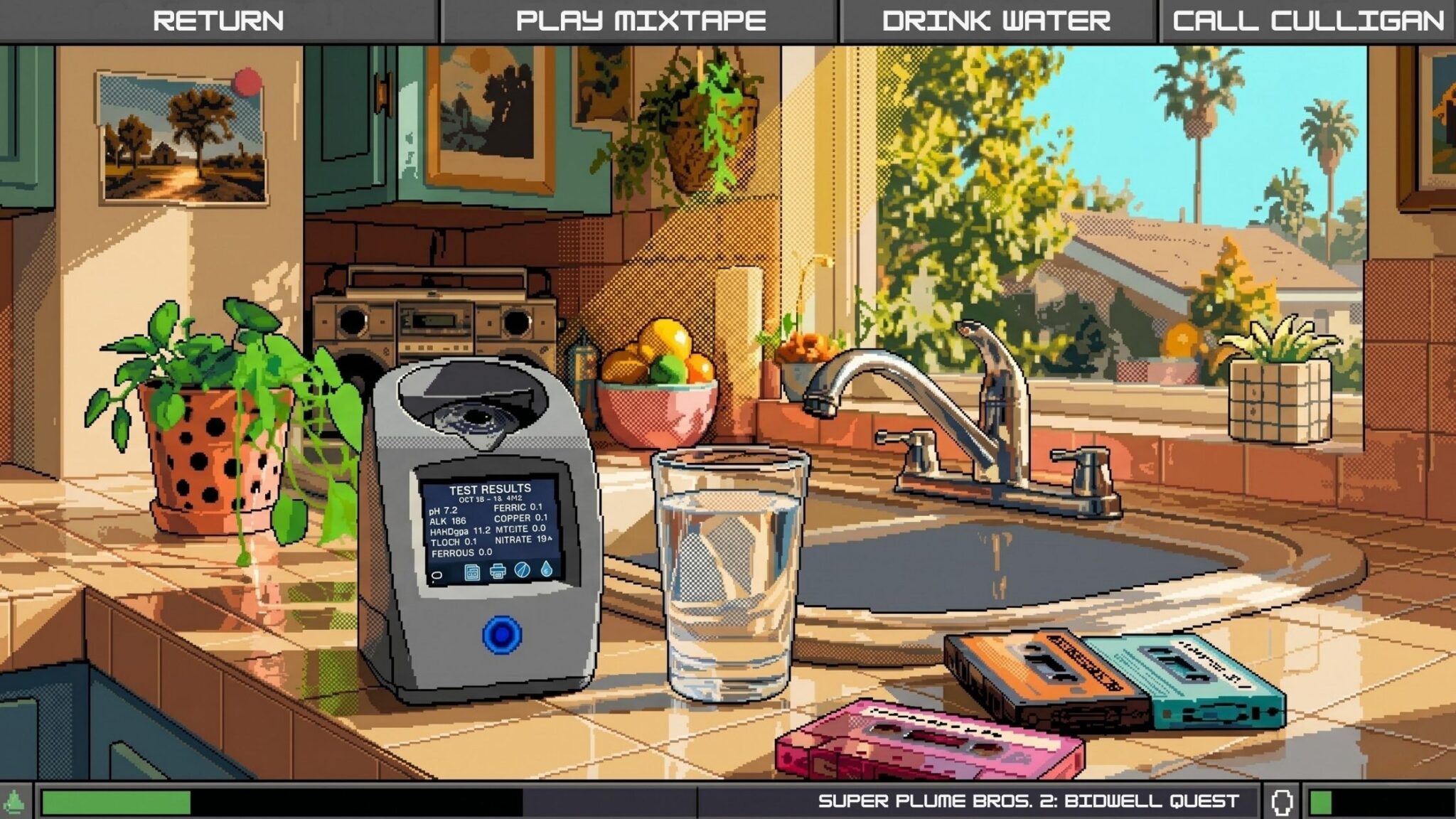
Here is where local water gets sneaky: Two homes can be near each other and still have very different water.
One neighbor may have hard water that turns shower doors into a chalkboard. Another may have nitrate concerns. Another may have bacteria issues after a well event. Another may be on municipal water and mostly notice chlorine taste or white spots.
Public reports we cited here are helpful. They give the big picture. But your tap is not an average.
Your kitchen sink is its own tiny water documentary, filmed daily with no commercial breaks.
That is why a water test at your home matters more than guessing from a map, a neighborhood rumor, or a Cal Water report that covers a whole system. You can start with our quick self-serve Water Quality Quiz if you are seeing symptoms like spots, smells, stains, or odd taste, to understand what issues you may face
The Solution: Test First, Then Treat What Is Actually There
Remember Arcade Games? Now, some were really good at Pinball Games. But some just kept on blindly pushing that button like their lives depend on it. At Culligan of Chico, we do not believe in throwing a random filter at a mystery and hoping for the best.
The smarter path is simple:
- Test the water at your tap.
- Look at what is actually present.
- Match the solution to the water.
- Maintain the system so it keeps doing its job.
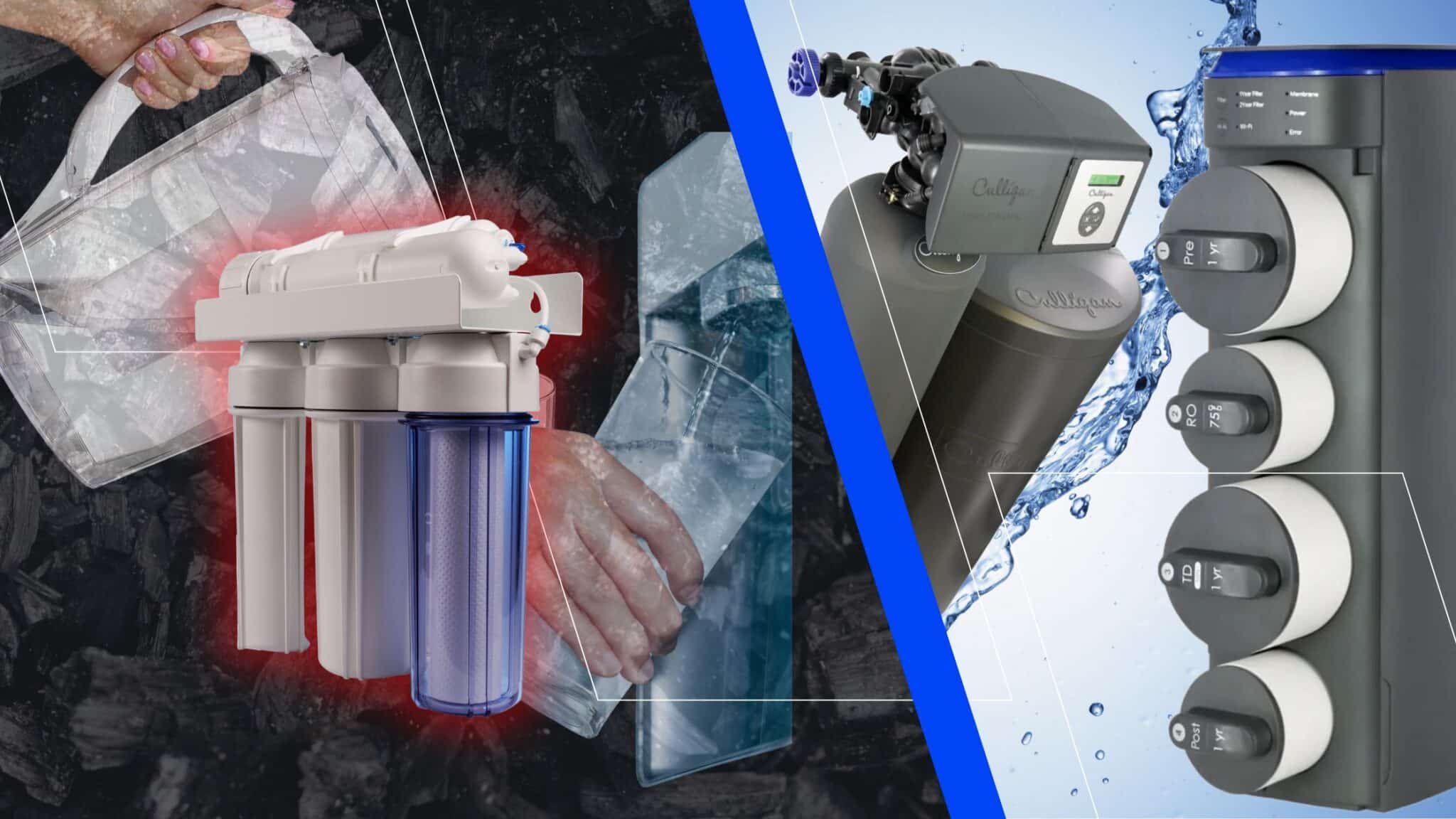
For some homes, that might mean drinking water filtration. For others, it may mean a whole-home system, a water softener, reverse osmosis, or a more specialized solution for well water. Our whole-home water filtration systems are designed around real water test results, not one-size-fits-all guesses.
And if you are on a private well, testing is especially important. Well water can change over time, and it can vary wildly from property to property.
A free water test from Culligan of Chico gives you a clear starting point without the drama.
Here is what someone had to say about that
Luke Haight came to our home and tested our tap & filtered water drinking water. He explained the test results and the proposed system completely and clearly. We are very happy with the professional and courteous service that Luke has provided us.
– Bruce J., Verbatim Google Review
Why “Legal” and “Ideal” Are Not Always the Same Thing
When a water system meets legal standards, that is important. Those standards help protect public health and guide treatment requirements.
But “legal limit” does not always mean “what every homeowner personally feels best about for long-term daily use.”
Some families want extra filtration because they have young kids. Some want better-tasting drinking water. Some want fewer unknowns. Some are on private wells and do not have a utility testing their water every year.
The Chico Plume Lesson, Decades Later
The Chico plume story is not just a piece of local history but also a reminder.
Water can look perfectly normal and still have a story beneath the surface. Sometimes that story is harmless minerals. Sometimes it is chlorine taste. Sometimes it is hard water. Sometimes, especially with private wells, it is something you would never know about unless you tested.
The 1980s gave us Walkmans, arcade games, and hairstyles with their own zip codes.
It also gave Chico a groundwater lesson that still matters today: Do not guess what is in your water. Test it.
Not Sure What Is in Your Water?
If your dishes look cloudy, your faucets are crusty, your water tastes off, or you are on a private well and have not tested recently, start there.
Take the Water Quality Quiz to narrow down what your water symptoms might mean.
Then let a local water expert test what is actually coming out of your tap.
Frequently Asked Questions
A good rule is to test your private well at least once a year for basic concerns like bacteria and nitrates, and to add testing for contaminants like arsenic, VOCs, or PFAS based on your location, past results, or changes in taste, smell, or nearby land use.
Some filtration systems can reduce VOCs, but the right system depends on your water test results, flow rate, and whether you need drinking water treatment or whole-home treatment. The best first step is testing your water so the system matches the actual issue.
Yes, private well owners should consider testing for VOCs like PCE, especially if they live near known plume areas or have never tested their well for contaminants beyond basic bacteria or nitrates. Private wells are not routinely tested the same way municipal water systems are.
Cal Water’s 2024 Chico report says the municipal system met every primary and secondary federal and state water quality standard that year. City water is tested and regulated, but some homeowners still choose additional filtration for taste, odor, hardness, or personal peace of mind.
The Chico groundwater plume refers to areas where contaminants, including PCE and other VOCs, moved through groundwater beneath parts of Chico. The issue was discovered decades ago and has been monitored and managed through cleanup, treatment, and water system changes.
What’s next
The Chico plume may have started back when cassette tapes ruled the dashboard, but your water question is happening right now, at your own tap.
Let’s find out what is really in it.