

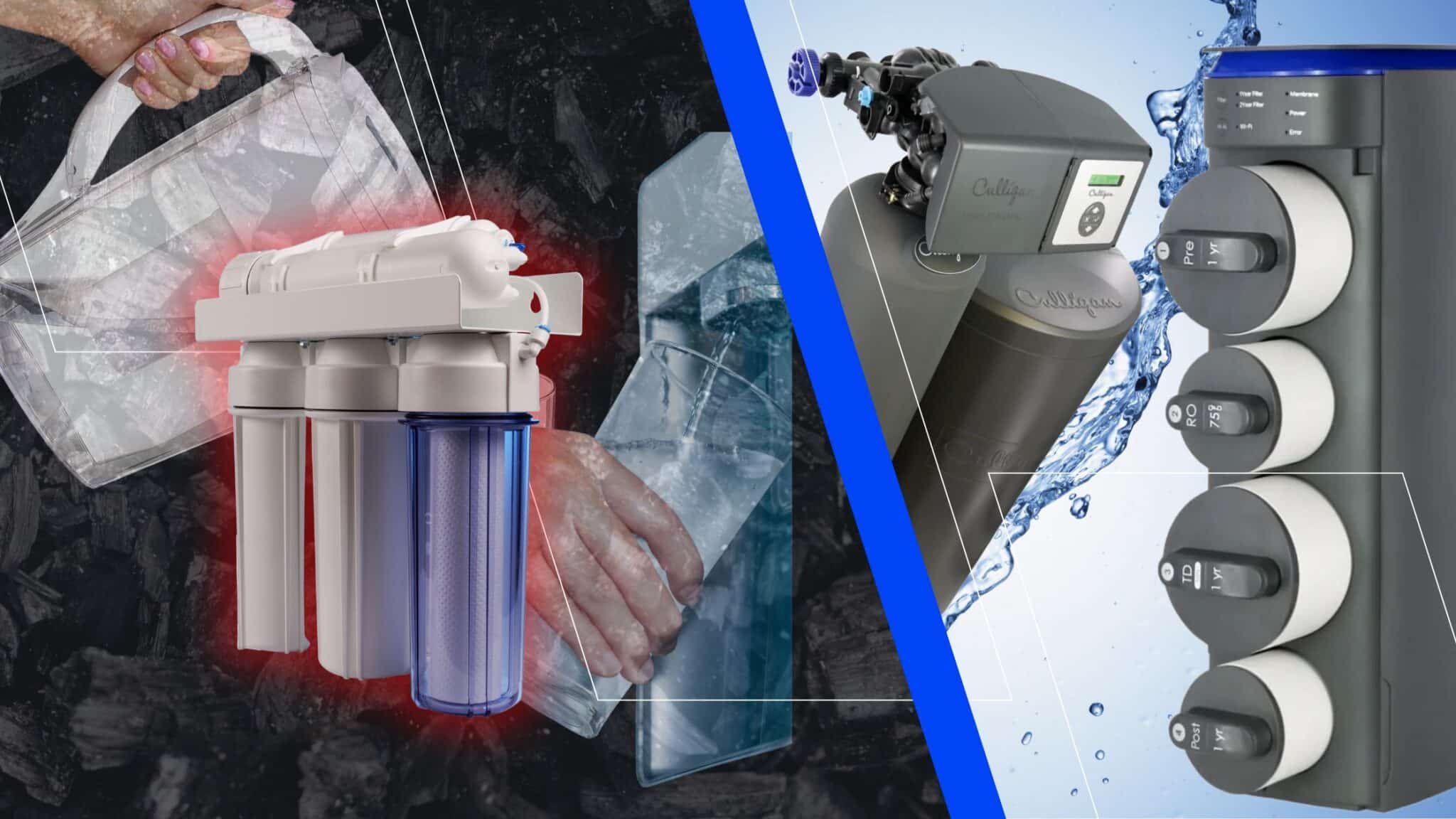
If you have started looking into water filtration, you have probably come across two common options:
- Carbon filters
- Multi-stage systems.
At first glance, they sound like they should do the same thing. Both promise cleaner water. Both are used in homes all over Chico, Paradise, Durham, Oroville, and the surrounding NorCal area. Both can absolutely help.
But they are not built for the same job.
A small refrigerator filter might make your water taste better. A larger multi-stage system may be designed to handle a much broader mix of water concerns. The difference comes down to what is in your water, how long the water touches the filter media, and whether the system has enough stages to treat the actual problem.
Not every filter is a bouncer at the same kind of party.
What a Carbon Filter Actually Does
Carbon filters are one of the most common types of water filtration, and for good reason.
They are especially useful for improving taste and smell. If your tap water has that “pool water” flavor, or if the odor makes you hesitate before filling your glass, carbon may help make the water more pleasant to drink.
Depending on the filter design, carbon (either 5 micron or 10 micron versions) can help reduce:
- Chlorine taste and odor
- Some carbon-based chemical compounds
- Certain pesticides and herbicides
- Some sediment or rust, when paired with the right sediment filter
That is why carbon shows up in so many everyday water products, including refrigerator filters, pitcher filters, basic inline filters, and some whole-home filtration systems.
For many homes, carbon is a helpful starting point. It can make a noticeable difference in the water you drink, cook with, and use for coffee.
But carbon is not magic. It does not grab every possible contaminant. It does not soften water. It does not automatically make water safe from every concern that may be present in a local supply.
The filter has to match the problem.
The Big Detail Most People Miss: Contact Time
Here is the part that does not usually make it onto the front of the filter box: Carbon filtration depends heavily on contact time.
Contact time means exactly what it sounds like: how long the water stays in contact with the carbon media before it reaches your glass, shower, or appliance.
Think of it like steeping tea. Dip the tea bag in for two seconds, and you get lightly tinted water. Let it steep properly, and you get actual tea.
Carbon works similarly. Water needs enough time touching the media for the filter to do its job. If the water rushes through too quickly, the filter may reduce some taste and odor, but it may not have enough time or media capacity to handle more serious contaminants effectively.
That is why filter size matters: A small filter has less media. Less media usually means less contact time. Less contact time means the filter has a smaller window to grab what it is supposed to grab.
Why a bigger filter can make a bigger difference
A larger filtration system gives water more room to move through the media at the right pace.
That can mean:
- More carbon media
- Longer contact time
- Better flow design
- Greater contaminant reduction potential
- Longer filter life
- More consistent results
This is one reason professional water treatment systems look different from a small fridge filter or pitcher cartridge. They are not just bigger for fun. They are built to give the water more time and more treatment surface to work with.
Tiny filter, tiny contact window. Big water problem, bigger solution needed.
Where Small Carbon Filters Fall Short
Small filters can be useful. We are not here to bully your refrigerator filter. It is doing its best in a very small space. But small carbon filters are usually designed for basic taste and odor improvement.
That includes:
- Refrigerator filters
- Pitcher filters
- Small under-sink cartridges
- Basic inline filters
- Small 10-inch whole-home cartridges
These filters may help your water taste better. They may reduce chlorine flavor. They may make ice cubes less weird.
But if you are dealing with more complex concerns, a small carbon filter may not provide enough media or contact time to do the job properly.
That matters when the concern includes things like:
- PFAS
- VOCs (like those from dry cleaning) chemicals found underneath Chico)
- Nitrates
- Bacteria
- Iron
- Low pH
- Arsenic
- Heavy sediment
- Hardness minerals
A basic carbon filter also will not soften water. So if your main problems are white crust on faucets, cloudy shower glass, scale in appliances, dry skin after showering, or crunchy towels, carbon is not the fix. That is a hard water problem, and it usually calls for water softening instead.
If scale is taking over your fixtures, learn more about water softeners for Chico-area homes.
Carbon Filters Do Not Fix Hard Water
This is one of the biggest points of confusion: A carbon filter can improve taste and odor, but it does not remove hardness minerals like calcium and magnesium in the way a water softener does. And that can be a costly issue in the long term.
A carbon filter will not usually solve:
- White crust on faucets
- Cloudy glasses
- Scale around showerheads
- Chalky residue on tubs
- Appliance buildup
- Dry-feeling skin from hard water residue
- Laundry that feels stiff or scratchy
Hard water is particularly an issue in Durham (amongst the hardest in the area), West Chico, North of Durham toward Hamilton City, Orland, Magalia (especially around Coutolenc Road), Oroville (East and outskirts like Cherokee and Butte Valley), Palermo, and Rancho Tehema.
So if your water tastes better after installing a carbon filter, but your shower door still looks frosted by minerals, you are probably dealing with two different issues.
What a Multi-Stage System Does Differently
A multi-stage system treats water in layers. Instead of asking one small filter to do everything, a multi-stage system uses different treatment steps for different water concerns. Each stage has its own job.
Depending on your home’s water test results, a multi-stage system may include:
- Sediment filtration to catch dirt, rust, sand, or grit
- Carbon filtration to reduce chlorine taste, odor, and certain chemical compounds
- Reverse osmosis for deeper drinking water filtration
- Specialty media for specific concerns like iron, sulfur, arsenic, or other local issues
- Water softening for hardness minerals that cause scale
- UV or other treatment options for certain well water concerns, when appropriate
This layered approach matters because water in Northern California is not one-size-fits-all.
➡️ Read also: Best Whole-House Water Filter for Chico Water Conditions
One home may be dealing with chlorine taste. Another may have hard water and scale. Another may be on a private well with nitrates or bacteria concerns. Another may have iron staining. Another may simply want better drinking water from the kitchen sink.
A custom system starts with the water, not the product box.
For drinking water concerns, a purified drinking water system can be part of a multi-stage approach designed around what is actually in your tap.
Paradise: A town with multiple issues
Paradise is a good reminder that water treatment is not always as simple.
After the devastating Camp Fire in 2018, Paradise and nearby communities were left dealing with more than damaged homes and burned land. The fire also raised serious concerns about water infrastructure, including contamination from damaged pipes and burned materials. Reports after the fire found chemicals such as benzene and other volatile organic compounds in parts of the affected water systems.
That is where a basic carbon filter can fall short.
A small carbon filter may help with taste and smell. It may make the water more pleasant to drink. But when a home has multiple concerns at once, the solution often needs more than one stage. That might mean sediment filtration, carbon, reverse osmosis, specialty media, or multiple tanks working together.
The point is that Paradise is a perfect example of why water should be tested before choosing a filter. A simple system can be exactly right in one home and completely insufficient next door.
Why This Confuses So Many Homeowners
A lot of people assume that once they have a filter, they are covered. Fair assumption. The word “filter” sounds pretty complete. But in real homes, water filtration is more specific than that. A filter designed for taste and odor is not the same as a system designed for hardness, PFAS, VOCs, nitrates, iron, or bacteria.
Here is what we see again and again in Northern California homes:
- Two houses on the same street can have different water results
- A fridge filter can improve taste without solving deeper concerns
- A small cartridge may not provide enough contact time for certain contaminants
- A carbon filter will not fix hard water scale
- A well home may need different treatment than a city water home
- A system that worked in one town may not be right for another
That is why “What filter should I buy?” is usually not the first question.
The better question is, “What is in my water?”
So Which One Do You Actually Need?
At Culligan of Chico, we do not start by guessing; we start by testing.
That gives us a clearer picture of what your home is actually dealing with, whether that is chlorine taste, hard water, sediment, iron staining, nitrates, well water concerns, or something else.
From there, we can recommend a system that fits the water instead of forcing your home into a one-size-fits-all setup.
That may include:
- A carbon filtration system for taste and odor
- A larger whole-home filtration system for broader treatment
- A reverse osmosis drinking water system for the kitchen
- A water softener for hard water scale
- Specialty media for local well water concerns
- A custom multi-stage setup for homes with more than one issue
You can explore whole-home water filtration systems for Chico and nearby communities to see how layered treatment can help with different water concerns.
See What Your Chico Neighbors Are Saying
We have been Culligan customers for over 30 years. We value the integrity of their service and products. They have always shown consistent concern for the quality of our water at our house. We also appreciate their awareness of our local water quality in general. (Myles) clearly was recommending what was best for our situation and not trying to sell us what we didn’t need. We look forward to upgraded RO unit as well as water softener. — Carol S. via Google Reviews.
Not Sure What’s in Your Water?
Before you compare carbon filters, reverse osmosis systems, or multi-stage filtration, start with the basics.
Find out what is in your water.
Take our quick Water Quality Quiz to get a better idea of what might be causing the symptoms you are noticing at home.
Then, let our local team test your water and help you understand what your home actually needs.
Frequently Asked Questions
If your water has multiple issues, such as chlorine taste plus hardness, sediment, nitrates, iron, or well water concerns, a multi-stage system may be a better fit. Start with a free water test so the system can be matched to your actual water.
Carbon filtration is often used to reduce chlorine taste, odor, and certain chemical compounds. Reverse osmosis uses a membrane for a deeper level of drinking water filtration. Many drinking water systems use both as part of a multi-stage setup.
Some refrigerator filters can reduce certain contaminants, depending on their certification and condition. But most are mainly used for taste and odor improvement. They are not a complete replacement for a properly designed drinking water or whole-home filtration system.
Contact time is how long water touches the filter media. More contact time gives the media a better chance to reduce certain contaminants. Small filters usually have less media and less contact time than larger systems.
It depends on what is in your water. A carbon filter may help with chlorine taste and odor, but it may not address hard water, PFAS, nitrates, bacteria, or other concerns. A water test is the best way to know.
What should I do before buying a multi-stage filter?
If your water has multiple issues, such as chlorine taste plus hardness, sediment, nitrates, iron, or well water concerns, a multi-stage system may be a better fit. Start with a free water test so the system can be matched to your actual water.
Your filter should not be a guessing game.
If your water tastes off, smells strange, leaves scale behind, or just makes you wonder what is really coming through the tap, Culligan of Chico can help you figure it out: We will test your water, explain the results in plain English, and recommend a system that fits your home.

